Immersive Fields
Research proposal · The field concept in the context of virtual realities
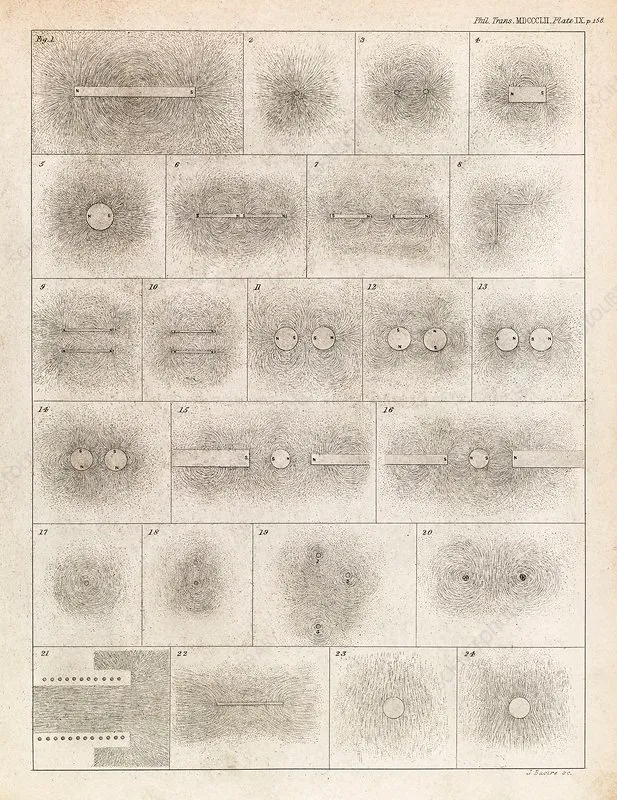
Plates · 13
My research proposal Immersive Fields, the theoretical part of my master’s thesis at KISD — Köln International School of Design at TH Köln, examines how far the concept of the field is suited to describing the tension between reality and virtuality. It is suited to it, provided the field is understood as bodily and material rather than merely optical.
Immersive fields, in this reading, can be understood as bodily-material zones of tension in which the capacities of the human perceptual apparatus are undercut, producing phenomena of bodily boundary-loss. These fields are immersive because reality arises within them in a continuous movement of submersion; they form in the convergence zones between what a body can perceive and the material or apparatus-based overstepping of that limit.
This makes the moon illusion an immersive field as much as an underground railway, a first-person shooter, or a minimally invasive robot-assisted operation. The sense of presence flows from the subject along bodily-material bridges into the target area and back again. Virtuality and reality are thus not mutually exclusive terms but — like the possible and the actual — points braced against each other within one field.
The argument draws on Laura Bieger’s Ästhetik des Immersiven and her reading of the Venetian in Las Vegas, where approaching a fictional Venice takes place in a double articulation: the body moves into the image space while the imagination approaches a possible Venice. Only the simultaneity of both movements turns an offer of immersion into an immersive experience. It draws further on Martina Löw’s concept of insularisation: on underground railways that sever the visual link between being moved and moving through the city, and on the Love Parade, where streets became dance floors and participation depended no longer on where but on when.
Two of the fields named here I examined separately: the Love Parade in the moving-image analysis Masses in (E)motion, the minimally invasive robot-assisted operation in Screen Spaces. The temporal offsets of such fields are taken up again in my doctoral research under the concept of delay.